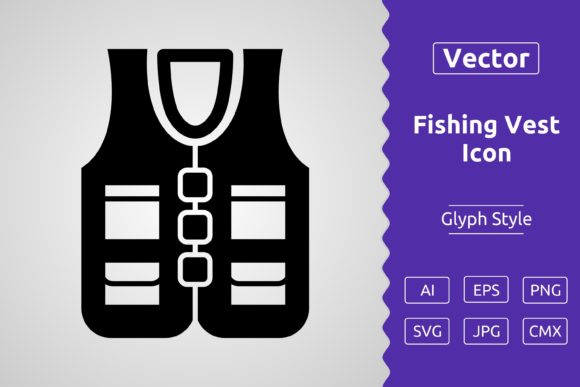
Vector Fishing Vest Glyph Icon
A Clean, Confident Glyph—Not Just Another Fish Hook
First impression? This isn’t a cluttered tackle-box illustration or an over-rendered angler portrait. Vector Fishing Vest Glyph Icon lands with quiet authority: a simplified, balanced silhouette of a classic fishing vest—pockets subtly defined, strap lines clean and intentional, no unnecessary texture or shadow. It reads instantly at small sizes, yet holds its shape beautifully when enlarged. As someone who’s stitched hundreds of icons onto everything from baby onesies to boutique aprons, I appreciate how this glyph avoids visual noise. It’s not “cute” in a cloying way, nor overly rugged—it strikes that rare middle ground: approachable, authentic, and quietly professional.
Where It Shines: Real Projects, Real Stitching
I recently used Vector Fishing Vest Glyph Icon as the centerpiece for a custom embroidered tote bag for a local fly-fishing guide service. We stitched it on midweight canvas with matte cotton thread—no fill stitch overload, just crisp satin outlines and subtle pocket definition. The result? Instant recognition without shouting. Customers paused, smiled, and said, “That’s *exactly* what my vest looks like.” That kind of resonance matters—not just for aesthetics, but for trust. When you’re selling handmade product or building a craft business, your embroidery needs to feel intentional, not generic.
It works especially well on structured items: sweatshirt chest placements, cap front panels (with slight simplification of inner lines if needed), embroidered patches for outdoor gear shops, and even nursery decor—think a soft linen pillow cover for a fishing-themed baby shower. Because the glyph is inherently symmetrical and uncluttered, it translates cleanly into machine embroidery design without collapsing detail or demanding excessive digitizing cleanup. I’ve also dropped it into printable mockups for Etsy listings; the transparent PNG and SVG files scaled flawlessly across device previews, reinforcing brand cohesion before a single stitch was made.
Where to Pause—and Test First
Don’t assume it’s foolproof on every surface. On thin fabrics like lightweight tees or baby rib knit, the outer outline can read as slightly heavy unless you adjust stitch density or opt for a running stitch border instead of satin. And on dark fabric? That’s where the high-contrast .PNG and .JPG previews become essential—you’ll want to test thread colors against actual fabric swatches, not just screen previews. I once stitched it on a charcoal hoodie using navy thread—only to realize the vest shape nearly disappeared. Switching to bright kelly green brought it alive again.
Curved surfaces like caps demand attention too. The glyph’s straight strap lines hold up well, but if you’re stitching near the bill seam or crown curve, always run a test hoop on scrap fabric first. Same goes for textured materials—burlap, terry cloth, or heavily brushed fleece can swallow fine lines. A light tear-away stabilizer + medium cutaway combo kept the details crisp on a kitchen towel project, but I’d skip it entirely on stretchy performance fabric without proper hooping technique.
Small Hoop? Think Smart Placement
This isn’t a tiny 1.5-inch icon—but it’s absolutely manageable in a 4x4 hoop if centered thoughtfully. For baby embroidery or delicate holiday embroidery (like a stocking cuff), scale it down just enough to preserve clarity—not so far that pocket depth vanishes. Avoid cramming extra text or borders around it in tight spaces; let the glyph breathe. Its strength lies in restraint, not embellishment.
What It Adds—Beyond the Stitch
Using Vector Fishing Vest Glyph Icon elevates more than just the item—it shapes perception. On a personalized gift, it signals care and specificity (“They *knew* what a real vest looks like”). In a small shop product lineup, it reinforces niche credibility—no stock fishing clipart here. For an Etsy seller listing custom apparel, it becomes a quiet differentiator among dozens of generic fish icons. And because it’s delivered as versatile design assets (.AI, .EPS, .SVG, etc.), you’re not locked into one use case: adapt it for digital embroidery file bundles, print-on-demand mockups, or even laser-cut wood patches.
That versatility supports commercial embroidery too—whether you’re fulfilling bulk orders for a lodge or creating limited-run embroidered patches for a conservation nonprofit. Just remember: licensing terms aren’t stated here, so verify permissions before reselling the digital embroidery file itself or bundling it into your own digital product offerings.
Your Practical Checklist Before Stitching
- Test first: Always run a sample on scrap fabric matching your final garment’s weight and stretch.
- Check contrast: View the .PNG and .JPG files against both light and dark backgrounds—then match thread colors accordingly.
- Review stitch density: If digitizing yourself or working with a digitizer, ask whether fill areas are optimized for breathable wear (e.g., on baby embroidery) or durability (e.g., on workwear).
- Confirm hoop size: Measure your intended placement area—this glyph scales well, but don’t guess.
- Inspect corners and curves: Zoom in on the .AI or .EPS file—look for anchor points that might translate to awkward jumps or dense clusters in stitch.
- Mock it black-and-white: Print a grayscale version to assess value separation before committing to color.
- Stabilize intentionally: Light fabric? Use tear-away. Stretchy or unstable? Add cutaway. Heavy texture? Try fusible + tear-away combo.
- Verify use rights: Since this falls under Graphics and Icons, confirm whether your intended use—especially resale of finished embroidered items or digital bundles—is covered.
In short: Vector Fishing Vest Glyph Icon isn’t flashy—but it’s reliable, recognizable, and rooted in real-world detail. It’s the kind of design that doesn’t distract from your craftsmanship; it quietly strengthens it. Whether you’re stitching a holiday embroidery gift for a lifelong angler or building cohesive branding for your craft business, this glyph earns its place—not as decoration, but as intention made visible.