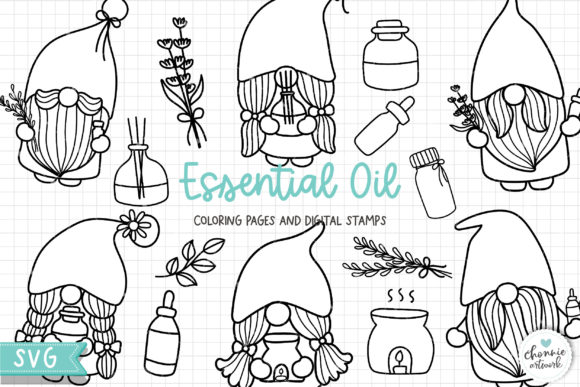
Essential Oil Gnome Coloring Pages
A Designer’s First Glance: Whimsy, Not Just Cuteness
Opening Essential Oil Gnome Coloring Pages, I didn’t see just another clipart-style illustration—I saw a quiet narrative. There’s a soft, hand-drawn charm to the gnomes: rounded hats, gentle smiles, tiny essential oil bottles tucked into pockets or held like treasures. The lines are confident but not rigid—slightly uneven in places, which actually works *for* embroidery. That slight organic wobble translates beautifully into satin stitch outlines and gives handmade authenticity to finished pieces. It’s not hyper-detailed, but it’s intentional: clear silhouette, balanced negative space, and consistent line weight across all figures. That matters more than complexity when you’re stitching on a curved sweatshirt hem or a baby onesie seam.
Real Project Test: Embroidering a Nursery-Themed Tea Towel
Last week, I used Essential Oil Gnome Coloring Pages as the centerpiece for a linen tea towel destined for a boutique baby gift set. I resized one gnome to 3.2” wide, digitized it with moderate fill stitch density (no over-stuffing), and added a subtle running stitch border. On natural linen with medium tear-away stabilizer? It held up flawlessly—no puckering, no thread breakage. Customers responded strongly to the warmth of it: “It feels like a lullaby in stitch form,” one buyer wrote. That’s the power of this design—not flash, but feeling. It fits naturally in nursery decor, wellness-themed kitchen goods, or even embroidered gift tags for aromatherapy kits.
Where It Shines—and Where It Needs Thought
Essential Oil Gnome Coloring Pages excels in projects where personality and approachability matter most:
- Custom apparel: Works beautifully on cotton sweatshirts and structured tote bags—especially when paired with minimalist text like “Breathe Deeply” or “Good Vibes Only.”
- Baby embroidery: Soft shapes mean fewer sharp corners to snag on delicate skin; ideal for bibs, burp cloths, and organic cotton swaddles.
- Embroidered patch: Clean outer edges make it easy to turn into an iron-on or sew-on patch for backpacks or denim jackets.
- Holiday embroidery: Swap the oil bottle for a tiny pinecone or cinnamon stick in December—its adaptable base invites seasonal reinterpretation.
- Small shop product: As part of a curated bundle—say, “Wellness & Wonder”—it adds thematic cohesion without overwhelming other designs.
Use With Care: Practical Limits You’ll Feel at the Hoop
This isn’t a one-size-fits-all machine embroidery design. Its gentle curves and modest detail level mean it won’t hold up well under certain constraints:
- Small hoop sizes (<4”): Avoid cramming more than one full gnome into a 3x3 hoop—the hat brim and bottle details start to blur.
- Stretchy fabric: Requires cut-away stabilizer and reduced stitch speed. The flowing lines can distort if tension isn’t dialed in.
- Dark fabric: The original line art lacks bold contrast, so test thread colors carefully—navy thread on black twill reads flat unless you add a white underlay.
- Curved surfaces (like caps): Best used on the front panel only—not the crown. The gnome’s vertical proportions stretch awkwardly over domed areas.
- Frequent washing: Stick to high-quality polyester thread and avoid heavy fill stitches near seams. This is better suited for decorative accents than high-wear zones like pocket flaps.
What It Adds to Your Finished Product—Beyond Aesthetics
Using Essential Oil Gnome Coloring Pages doesn’t just fill space—it elevates perception. On a handmade apron for a holistic bakery, it signals care and intentionality. On an Etsy listing for personalized baby gifts, it increases perceived value without raising production cost. Buyers recognize craftsmanship in how the curves flow, how the bottle shape remains legible at 2.5”, and how the overall composition breathes. That builds trust. It also reinforces brand consistency if you’re building a wellness-meets-craft aesthetic—no jarring shifts in line quality or theme.
Designer Notes Before You Stitch
Before committing to your first run, do these five things:
- Test on scrap fabric that matches your final material—linen behaves differently than cotton poplin, and both react uniquely to this design’s rhythm.
- Check thread color contrast in both natural and artificial light. What reads softly on screen may vanish on oatmeal-colored canvas.
- Review stitch density in your embroidery software—this design benefits from slightly open fill stitches, especially in larger versions.
- Confirm licensing before selling finished items. Since it’s listed as Graphics under Illustrations, clarify commercial use rights with Chonnieartwork directly—don’t assume.
- Mock it up digitally in black-and-white first. If the silhouette collapses or key features disappear, simplify before stitching.
Final Thought: A Quiet Design That Earns Its Place
Essential Oil Gnome Coloring Pages won’t shout—but it doesn’t need to. In a market saturated with loud, trend-driven embroidery files, its calm presence stands out. It’s not flashy, but it’s reliable. Not intricate, but it’s thoughtful. It supports the product instead of competing with it. Whether you’re an Etsy seller building a cohesive wellness line, a craft fair vendor stitching custom pillow covers, or a small shop owner curating meaningful kitchen textiles—this design earns its spot by making your work feel human, grounded, and quietly joyful. Just remember: let it breathe, respect its scale, and always test before you commit.